Best Cage Setup for a Canary — Step-by-Step Layout Guide
How to set up a canary cage properly — cage shape, perch types and placement, food and water dishes, bath, cuttlebone, floor covering and what to leave out.
In this guide
Quick answer Use a long, rectangular cage. Place natural wood perches of different thicknesses near each end so your canary flies between them, keep the middle open, position seed and water dishes beside (not under) perches, add a cuttlebone, offer a clip-on bath several times a week and line the floor with plain paper. Leave out sandpaper perches, mirrors and clutter.
A well-set-up cage encourages a canary to fly, keeps food and water clean and makes daily cleaning quick. The key principle is simple: design the cage around flight.
Step 1: Start with the right cage
- Long and rectangular, not tall or round. See best cage size for a canary.
- Bar spacing of about 1 cm (around 3/8 in) or less.
- Horizontal bars on at least two sides help birds climb, though canaries mostly hop and fly.
- A pull-out tray and wide doors make cleaning and bathing easier.
- Safe materials: Powder-coated or stainless steel in good condition, with no peeling paint, rust or sharp wire ends.
Step 2: Place the perches for flight
| Perch placement | Why |
|---|---|
| One perch near each end | Makes the bird fly the full length of the cage |
| Different heights at each end | Adds variety without blocking the flight path |
| Not directly above dishes | Keeps droppings out of food and water |
| Clear space in the middle | The flight "runway" |
Which perches are best?
- Natural wood branches of varying thickness are excellent. The uneven surface exercises feet. Use only wood known to be safe for birds, from untreated, unsprayed trees, washed and dried before use.
- Wooden dowels are fine if they vary in diameter; most canaries are comfortable on perches roughly 1–1.5 cm thick.
- Avoid sandpaper covers. They can irritate feet and do not usefully trim nails.
- Plastic perches are easy to clean but slippery and uniform; they are best mixed with wood.
Step 3: Food and water
- Put seed and water dishes beside perches, where the bird can reach them easily but droppings will not fall in.
- Use a separate dish for fresh food and egg food.
- Many keepers prefer tube drinkers or covered water containers, which stay cleaner than open dishes.
- If you add a new style of feeder or drinker, keep the old one in place until you are sure the bird is using the new one.
Step 4: Calcium and extras
- Cuttlebone or a mineral block, clipped to the bars near a perch, soft side facing the bird.
- A clip-on bath several times a week. See do canaries need a bath.
- Optional: one swing or a fresh branch for interest — but only if it does not block flight.
Step 5: The cage floor
Plain paper or cage liner on the tray is the most practical choice. It is cheap, easy to change daily and lets you see your bird's droppings clearly — useful for noticing changes. Avoid materials that get dusty or that the bird might eat.
What to leave out
| Item | Why leave it out |
|---|---|
| Sandpaper perches | Can irritate feet |
| Mirrors | Can encourage display and frustration in males |
| Lots of toys and ladders | Block flight space |
| Fabric hideaways and huts | Can trap and tangle toes; not needed outside breeding |
| Cheap painted toys | Paint may not be bird-safe |
A simple layout example
 ____________________________________________________
|  [perch]                                [perch]    |
|   seed  water         (open flight)      water     |
|  cuttlebone                               bath     |
|____________________________________________________|
       60–90 cm+ of length — the longer the better
Keep it consistent
Once your canary is used to a layout, avoid rearranging it frequently. Canaries take comfort in a predictable environment. Change one thing at a time.
Next steps: choose where to put the cage, check the household dangers and set a cleaning schedule.
Frequently asked questions
How many perches does a canary need?
Two or three is usually enough in a standard cage — one near each end, plus optionally one at a different height near the food. More perches mostly reduce flying space.
Do canaries need a swing or toys?
Not really. Some canaries use a swing, but canaries are not toy-focused like parrots. Flight space, natural perches, baths and fresh greens matter much more.
Should I put a mirror in a canary's cage?
It is generally better not to. A mirror can encourage a male to display to or fight its reflection and does not replace real space or routine.
This guide shares general husbandry information and practical keeping experience. It is not veterinary advice. If your canary seems unwell, contact an avian veterinarian. Spotted an error? Report a correction.
Related guides
Best Cage Size for a Canary
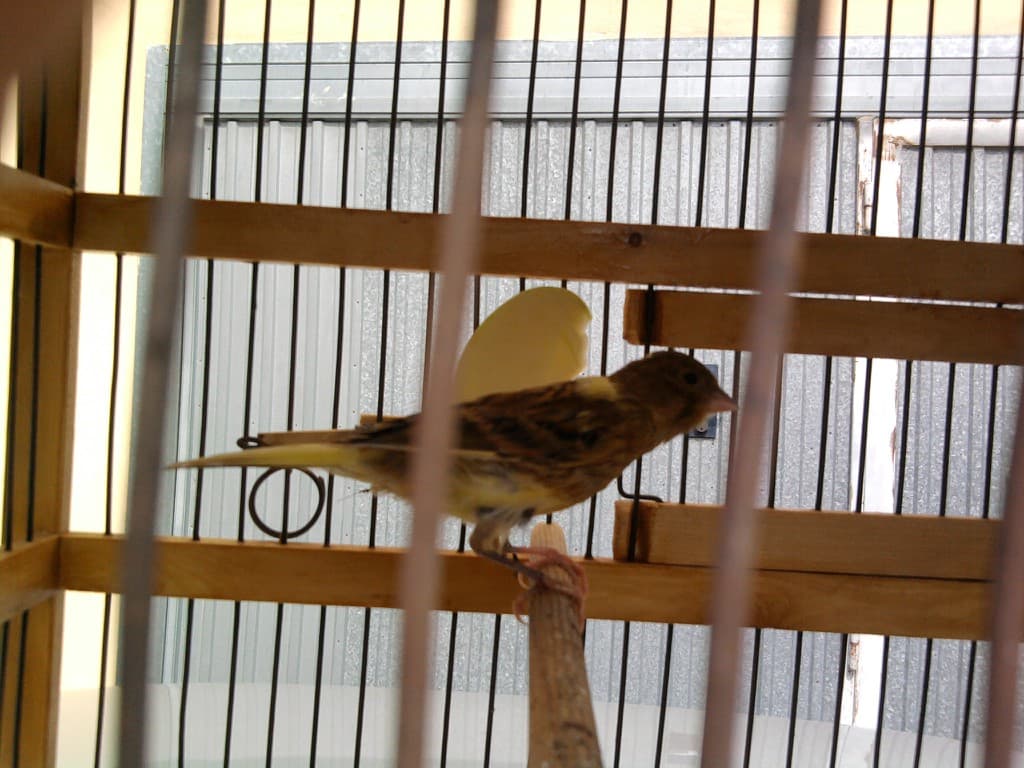
What size cage a canary needs — why length matters more than height, practical minimum dimensions for one canary, sizes for pairs and flights, and safe bar spacing.
Where to Put a Canary Cage
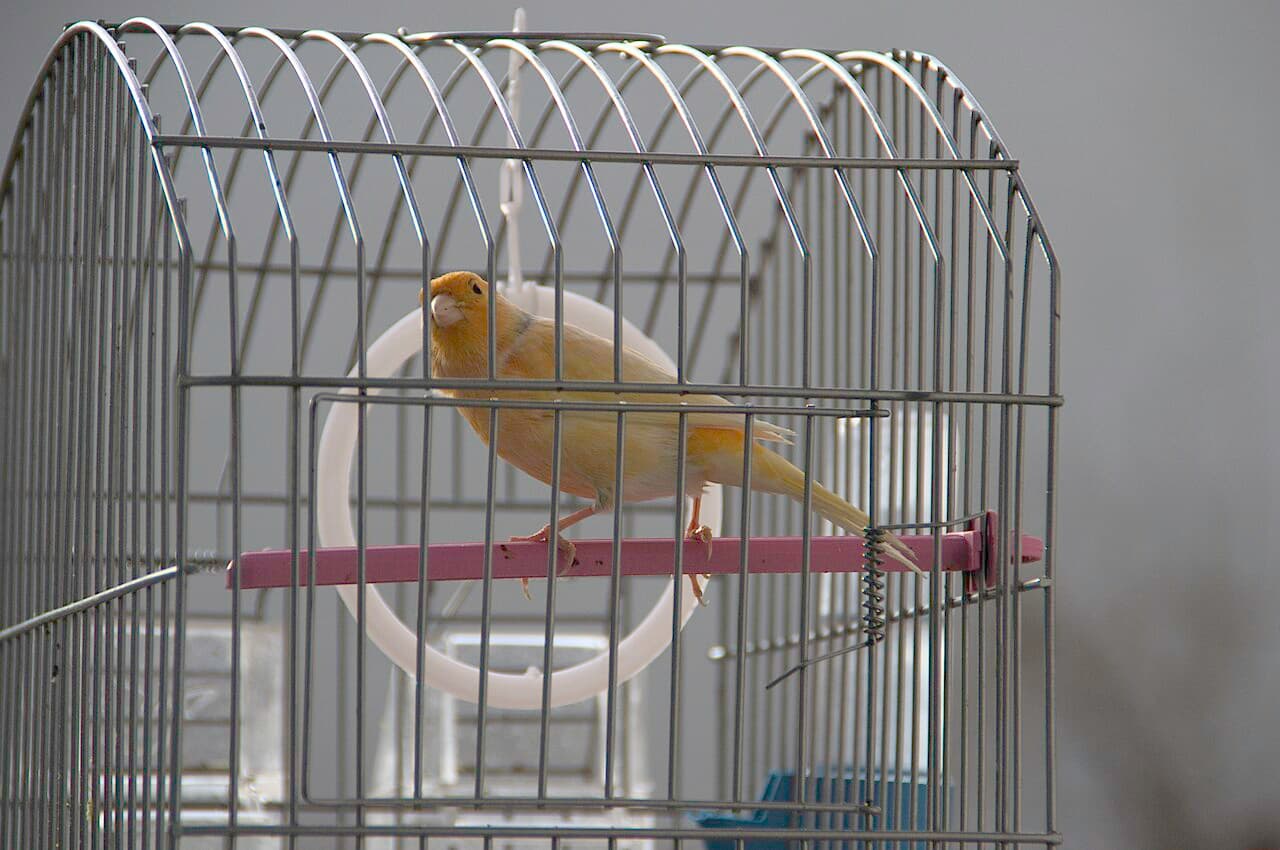
Where to put a canary cage at home — the best rooms, height and wall position, plus places to avoid such as kitchens, drafty windows, heaters and busy hallways.
How Often Should You Clean a Canary Cage?
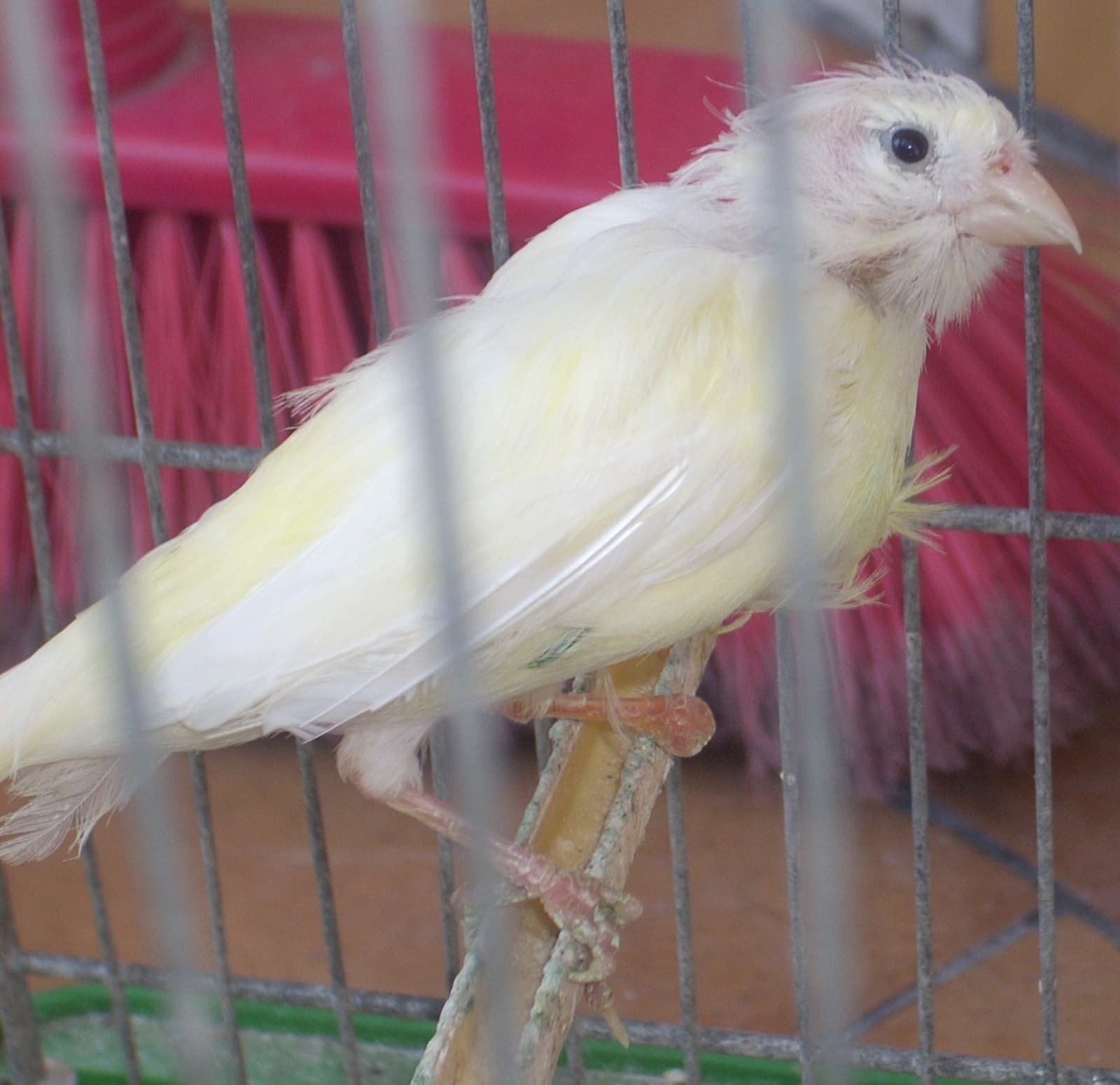
How often to clean a canary cage — daily, every few days, weekly and monthly tasks — plus a step-by-step full clean and which cleaning products are safe around birds.
Complete Canary Care Guide
A complete beginner guide to domestic canary care: choosing a canary, cage setup, food, water, sleep, light, bathing, cleaning, molting, breeding and routine.